How to implement precision nutrition
In today’s livestock industry, feed accounts for up to 70% of production costs (chart 1.), making nutrition the single biggest lever for profitability. At the same time, producers face mounting pressure to maintain animal performance, ensure feed quality, and meet sustainability targets. Precision nutrition programs offer a smarter way forward — using data-driven insights to design diets that match animal needs exactly, reduce waste, and optimize raw material use. This approach not only cuts costs but also delivers consistent quality and supports long-term business success.
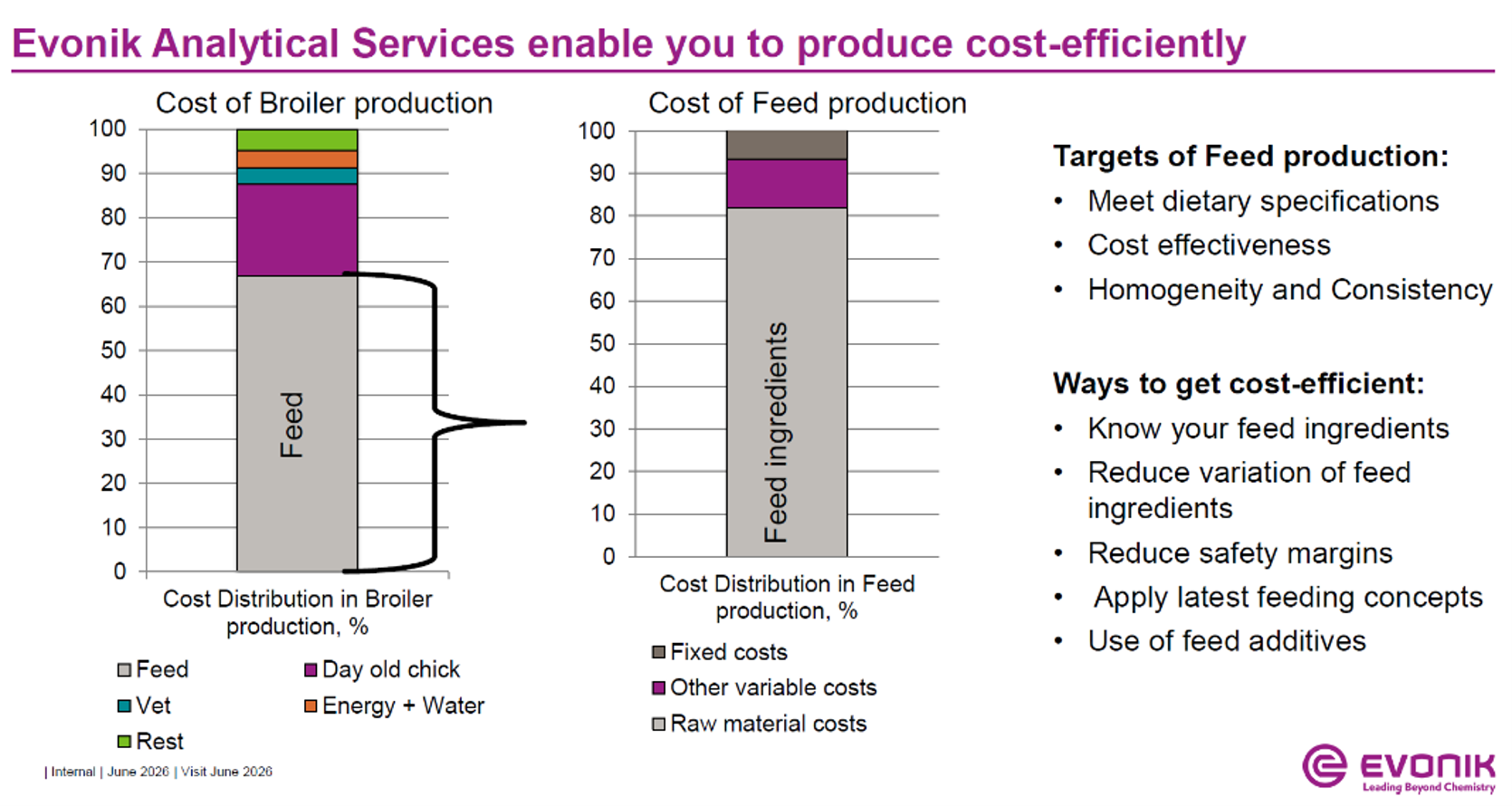
Chart 1
Steps to achieve precision nutrition
The key: A precisely balanced diet. The correct nutrient composition optimizes both livestock performance and feed production. Evonik has developed an array of sophisticated, yet easy-to-use, tools
AMINOSpec®– precise nutrient recommendations for largest range of species
AMINODat®– the most comprehensive nutrient database in the world
AMINOLab® – high precision wet-chemical analyses of all types of feed ingredients
AMINONIR®– fast and reliable NIR results for feed ingredients and finished feeds
AMINOBatch® - precision monitoring service for optimized mixing homogeneity
AMINOSys® - the state-of-the-art dosing solution for micro feed ingredients
to support our partners in achieving this balance and making production more efficient. Start optimizing your feed formulation now by following these steps.
SET NUTRITIONAL TARGETS
The nutritional requirements can be affected by many factors including sex, age, body weight, breed, health and environment. Setting an adequate nutritional target is the starting point of any cost-efficient feed formulation. Proteins, more precisely amino acids, are one of the most valuable components in any diet and deserve specific attention. That’s why Evonik developed the software AMINOSpec® (chart 2.) that quickly and easily derive the right amino acid recommendations for pigs, broilers, laying hens and aquatic species. AMINOSpec® allows to design specific feeding phases according to your needs, generating dynamic and flexible feeding programs. AMINOSpec® calculates nutritional recommendations that are specific to your conditions, based on key performance indicators of your animal production. Tailored nutritional recommendations allow to produce feeds that meet the exact needs of animals, optimizing performance, ensuring optimal use of resources, reducing emissions and increasing the efficiency of your business.
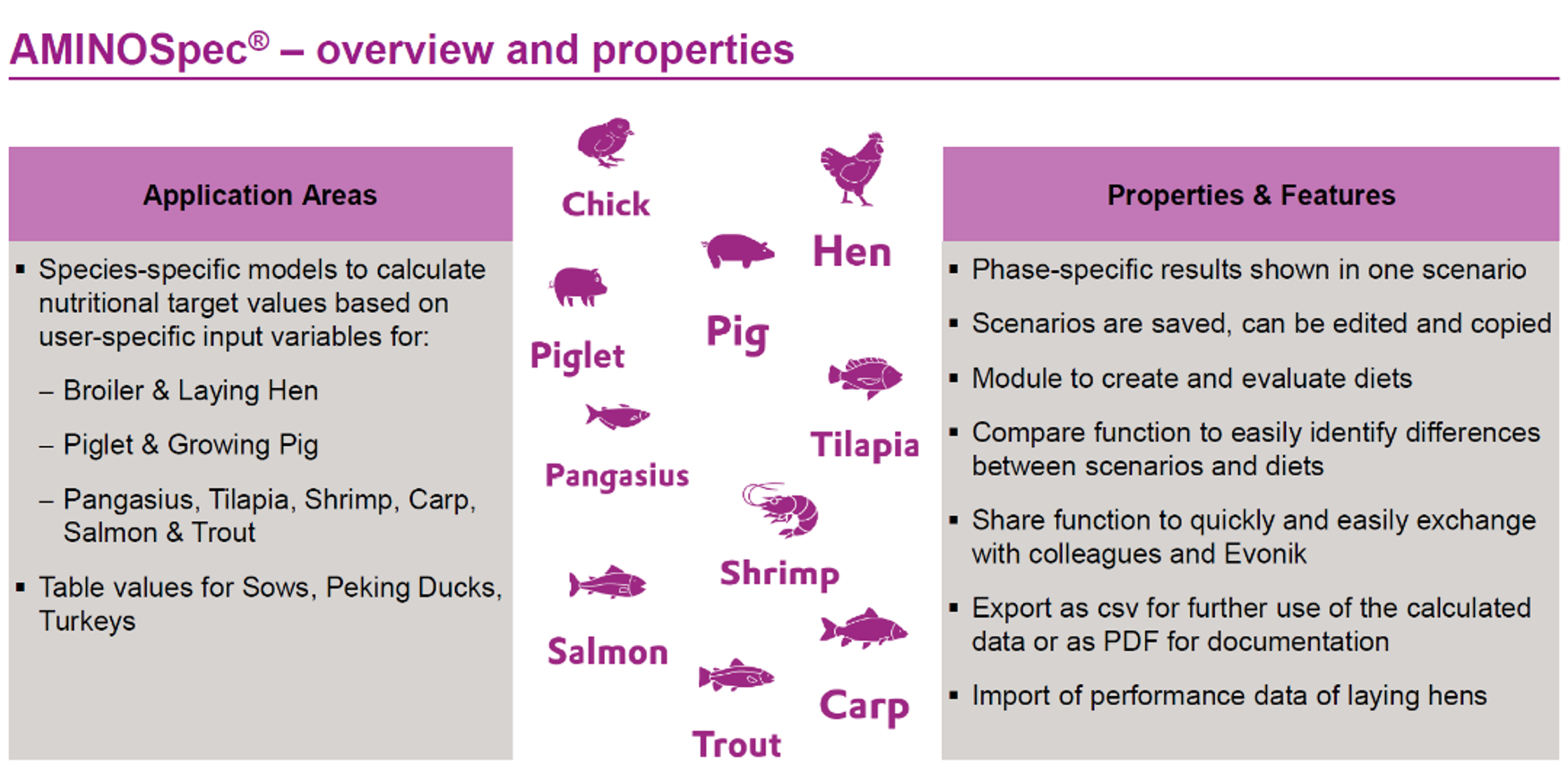
Chart 2
EVALUATE YOUR RAW MATERIALS
Once you know what your animals need for optimum performance, you can combine your feed ingredients in suitable amounts to meet those nutritional requirements. Especially considering the varying nutrient content of feed ingredients, the task of determining and maintaining the perfect balance of feed ingredients is extremely demanding. Variability is a particularly pertinent concern when we look to regions of the world experiencing unprecedented weather conditions, including floods, droughts and extreme temperatures, which heavily impact raw material quality.
Formulating the ideal feed calls for precise and in-depth data. In today’s competitive, global livestock industry, the precision of finished feed and the efficiency of feed conversion can mean the difference between profit and loss.
The constantly growing AMINODat® (chart 3.) database records the nutritional composition of more than 4000 raw materials from around the world. It is based on more than 1.6 Mio samples and more than 97 million nutrient datapoints. Using these data, you can explore the typical composition of raw materials which are currently used by the global feed industry. AMINODat® covers raw materials which might be uncommon in your region but are a standard feed ingredient in other parts of the world. Thus, you can identify options to diversify your supplies and benefit from the use of alternatives to classic raw materials like soybean meal and corn.
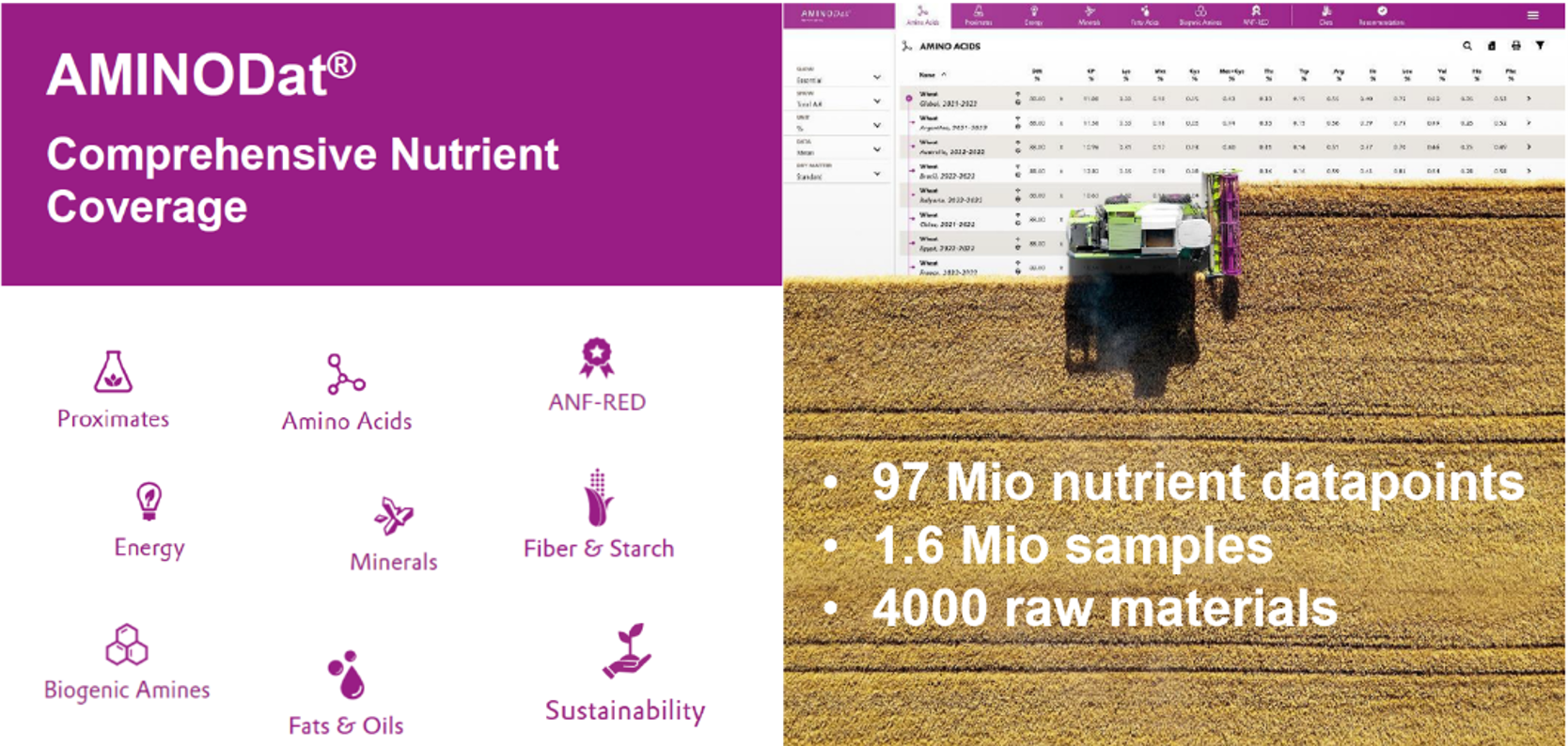
Chart 3
The average nutritional composition of raw materials is a sound basis to consider their potential usage in feed formulation. However, as we strive to produce a feed that meets the animal’s needs, we need to minimize variability of incoming materials to achieve the nutritional targets of the finished feed, day in and day out. AMINODat® is supporting you to achieve this goal as it provides not only average data but it also indicates the minimum and maximum and the coefficient of variation for all analytical parameters. Thus, you can compare the nutritional variation of different raw materials with each other and you can explore how it differs on a global scale vs. within the country of interest. You can identify that certain raw materials are much more variable than others and that certain geographical regions show higher variations. These insights are a good basis to take informed decisions and rethink your supplies.
To take the precision to an even higher level and account for variability of raw materials (chart 4.) between shipments, Evonik offers AMINOLab® and AMINONIR®. AMINOLab® service provides analysis of raw materials and finished feeds using wet-chemistry methodologies at one of Evonik’s quality-controlled facilities around the world. AMINONIR® uses near infrared (NIR) technology to deliver fast, onsite and offsite analyses of your raw materials and finished feeds.
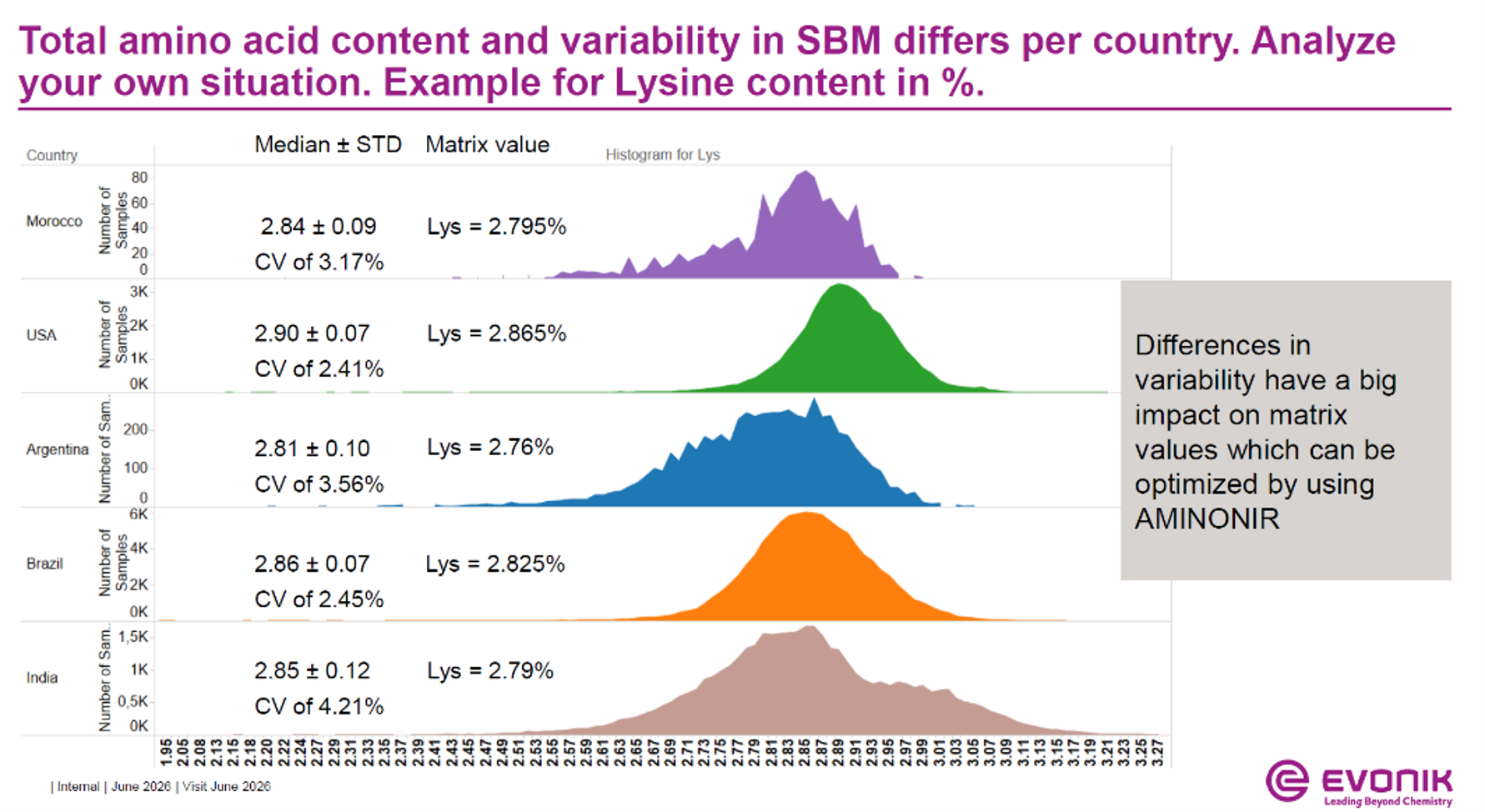
Chart 4
Built on decades of science-based research and expertise, AMINONIR® can be used at the feed mill to determine and record the precise nutritional content of feed ingredients or finished feeds, delivering reliable results in a matter of minutes. One NIR machine can easily analyse more than 10,000 ground or unground samples per year enabling a seamless quality control and building up valuable data sets. These data sets can then be used to extract extra benefits beside quality control. Evaluation of the data sets identify qualitative differences between raw materials of different geographical origins or differences between suppliers or processing methods. These evaluations help to reduce the overall variation and ensure a competitive advantage based on verifiably superior quality, see below calculation comparing the economic value of different Lys content in SBM from the USA and Brazil (Chart 5.).
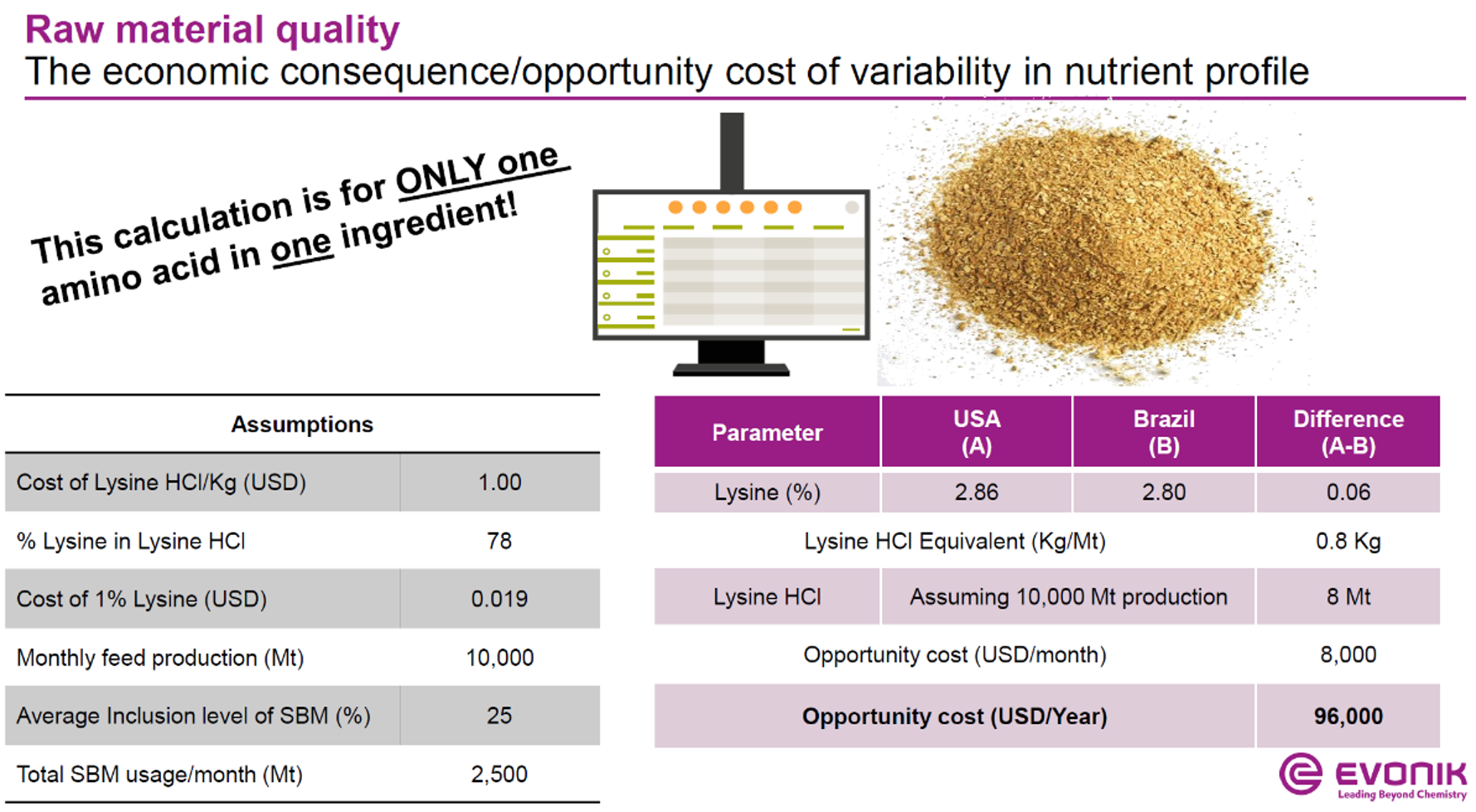
Chart 5
Focus on what matters
Today NIR analytics is an established tool to analyse incoming raw materials and finished feeds with minimal efforts. Reliable NIR calibrations have been developed by Evonik to derive relevant information on the nutritional composition, not only for proximate parameters like dry matter content, crude protein etc., but even on nutrients like amino acids and fatty acids as the nutrients are the real value drivers. Importantly, AMINONIR® analysis can also detect where ingredients have been under- or over-processed. This is crucial, because under- and over-processing lowers amino acid digestibility and depletes the nutritional value of feed ingredients, which can result in poorer feed quality and decreased animal performance (Chart 6.).
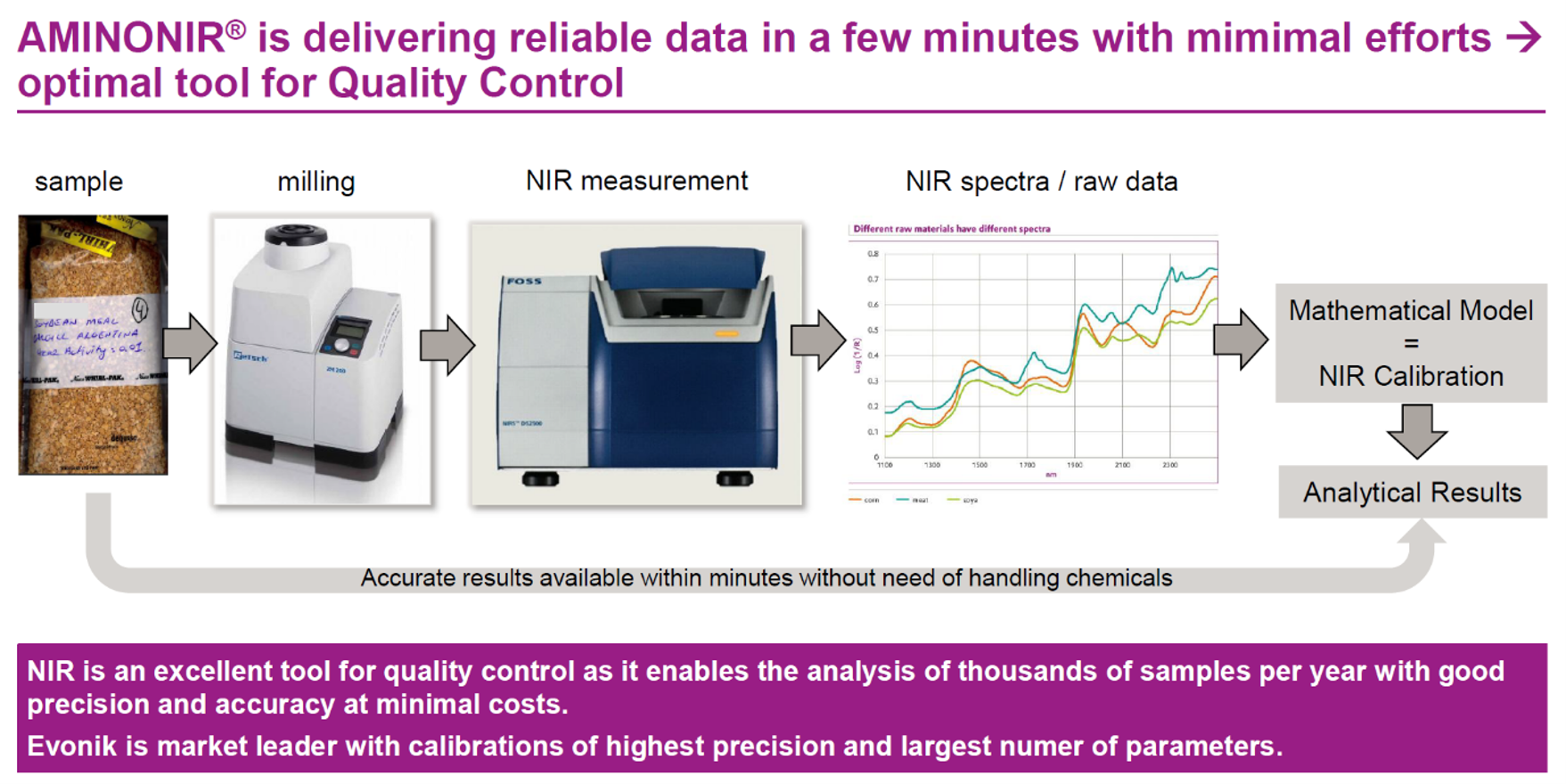
Chart 6
HEAT-RELATED NUTRIENT VARIABILITY
Heat is applied during the processing of feed ingredients due to various reasons. For example, in the processing of oil seeds by solvent extraction a toasting step is needed to recycle the added solvent, and in case of soybeans, to deactivate anti-nutritional factors. In other cases drying is required to achieve storage stability like in the case of corn DDGS or if harvest conditions of grains had been unfavorable. However, heating can destroy and reduce availability of amino acids mainly due to Maillard reactions. The standardized ileal digestibility (SID) of amino acids may overestimate their availability in over-processed ingredients. In response, Evonik has developed the rapid NIR-based method to estimate the degree of heat-damage as well as to correct the SID of amino acids in selected feedstuffs, including soybean products, rapeseed meal, corn and corn DDGS. Using the corrected SID values for heat-damaged products in diet formulation can help you avoid impaired production performance. Identifying non-adequately processed raw material batches gives you the opportunity to get into discussion with your suppliers and rethink your supplies if necessary.
BALANCE THE DIET
Pigs and poultry need the right balance of amino acids for optimum growth or egg production and profitable performance. Methionine is the first-limiting amino acid in typical broiler and laying hen diets whereas lysine is typically first-limiting in pig diets. If the dietary level of an essential amino acid is deficient, the other amino acids cannot be utilized to full potential. An amino acid imbalance leads to lower deposition of protein and higher nitrogen excretion, contributing to increased environmental pollution. Optimum performance can be achieved by supplying all amino acids in the feed according to the ideal protein concept.
IDEAL PROTEIN DIETS
Reducing nitrogen excretion and ammonia emissions to the environment is a top priority in animal production. A high level of dietary crude protein (CP) is the main cause of excessive nitrogen excretion. Formulating ideal protein diets with reduced dietary CP levels supplemented with crystalline amino acids provides an adequate balance regarding amino acids and energy. It is an effective way to reduce nitrogen excretion, without compromising performance, optimizing feeding cost and reducing soybean meal dependency. Increased commercial availability of amino acids such as methionine, lysine, threonine, tryptophan, valine and isoleucine allow animal nutritionists to reduce dietary CP levels even further. On average, each 1 %-point CP reduction results in about 10 % reduction of nitrogen excretion, which significantly contributes to the reduction of ammonia emissions and decrease in drinking water intake. This translates into lower moisture in the manure, diminishes poultry foot pad lesions and dirty eggs incidence, improves animal welfare as well as conditions for employees and the environment. A further reason to avoid high CP diets is that increased undigested protein that reaches the hindgut can promote proliferation of pathogenic bacteria such as E. coli. Bacterial fermentation of undigested protein produces potentially toxic substances such as ammonia and amines. A balanced protein diet with supplementing amino acids can reduce the production of harmful microbial metabolites plus the inclusion of insoluble fiber enhances nutrient digestion and modulates behavior. Together with advanced feeding concepts, the use of additives such as probiotics keeps and restores balanced gut microflora and has beneficial effects in the digestive tracts.
ENSURE PRECISION IN DOSING
Efficient handling of feed additives from bags, big bags or bulk silos in the feed mill is essential in producing consistently high-quality feeds. Weighing and transport processes need to be fine-tuned to achieve short batch cycles and high output. Well aligned, state-of- the-art hardware and software solutions can enable the required precision in micro-ingredient handling and dosing. Evonik provides comprehensive engineering and commissioning support to ensure that you achieve these goals. The AMINOSys® equipment range includes flexible solutions for fully automated direct dosing or for conveying from bulk silos to existing micro ingredient systems.
CHECK THE FINAL QUALTIY
Quality control of finished products is an important task and this holds true for feed mills, too. With regard to finished feeds it needs to be assured that the nutritional targets are met and that the nutrients are equally distributed. Quick evaluation of the proximate parameters using AMINONIR® gives a first feedback if the composition of the actual feed is meeting the expectations. However, with regard to homogeneity more advanced analytics are needed as an even distribution of feed additives cannot be estimated based on an even distribution of proximate parameters like crude protein. Evonik developed the AMINOBatch® service to evaluate the homogeneity of finished feeds with minimal efforts as it is done without addition of special markers and without interrupting the feed mill process. It is assessing the distribution of supplemental amino acids in 10 feed samples from the same batch using AMINOLab® analytics. AMINOBatch® provides the necessary data to improve the mixing process, leading to production of consistent feed of the expected nutritional quality. In turn, this supports healthy and cost-effective production of animal products.
Summary:
Precision nutrition can be achieved if all departments work closely together and for the same goal. Each step from purchasing, feed design, feed manufacturing to quality control needs to align with the overarching goal to produce feeds that precisely meet the nutritional requirements of the targeted animals. It might be necessary to define new KPIs and to rethink established routines and processes, as for example, the usage of more expensive but more reliable and less variable raw materials pays off if safety margins can be lowered. Lower safety margins require a strict quality control of incoming goods to notice deviations from the expected quality as early as possible. It might be necessary to use new and additional parameters for quality control as for example under-processing nor heat-damage will be picked-up by looking at proximates. Once off-spec material is identified, action plans need to be in place to ensure rejection of the shipment or proper handling of material and necessary follow-up actions.
Evonik is offering a broad range of tools and services to support you in establishing precision nutrition. Make use of AMINOSpec® to derive nutritional recommendations which fit to your local conditions. Find reference data on feed ingredients in AMINODat® including standardized ileal digestible amino acids for pigs, piglets and poultry to implement low protein diets. Analyze your own feed ingredients and finished feeds with AMINONIR® and AMINOLab®, update your matrix values accordingly and lower safety margins to the minimum. Optimize handling and dosing of feed additives using AMINOSys® and check the homogeneity of your feeds with AMINOBatch®.
The AMINOServices (chart 7.) support you in mastering the challenge to produce the most cost-efficient and effective diets that fulfil the nutritional needs of your animals and to successfully implement precision nutrition.
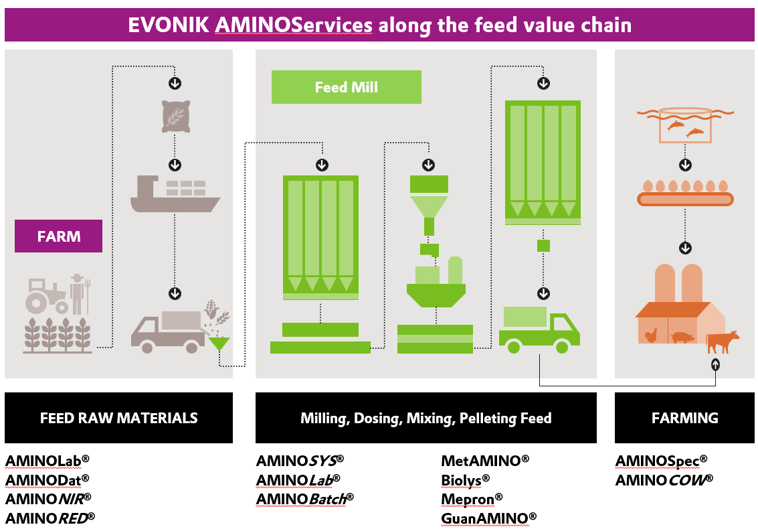
Chart 7
The content of this document is for the information and assistance of Evonik’s customers and is not applicable to products marketed or sold in the United States. Evonik markets its products in compliance with applicable local laws, but it is the user’s responsibility to ensure that the use of and any claims made for this product comply with all relevant requirements. This document may not be published in the United States without the express written consent of Evonik Operations.